


How Accurate Is Interstellar? Science and Fiction
Breaking down the physics of Miller's planet, Gargantua, and the tesseract to see exactly what the film gets right.
KinoShelf Journal · · 5 min read
Interstellar anchors its emotional stakes in tested general relativity, turning temporal physics into an unyielding physical obstacle. It uses real astrophysics to turn time itself into a physical barrier, though it also ventures into speculation when it needs gravity to send a message back home. The extreme physics on Miller’s planet and the visualization of the Gargantua black hole derive from rigorous gravitational theory provided by theoretical physicist Kip Thorne. Conversely, the traversable wormhole near Saturn, the nitrogen-consuming blight, and the five-dimensional tesseract are narrative constructs designed to force humanity into deep space and resolve a personal story of family loss.
The Math Behind Miller’s Planet
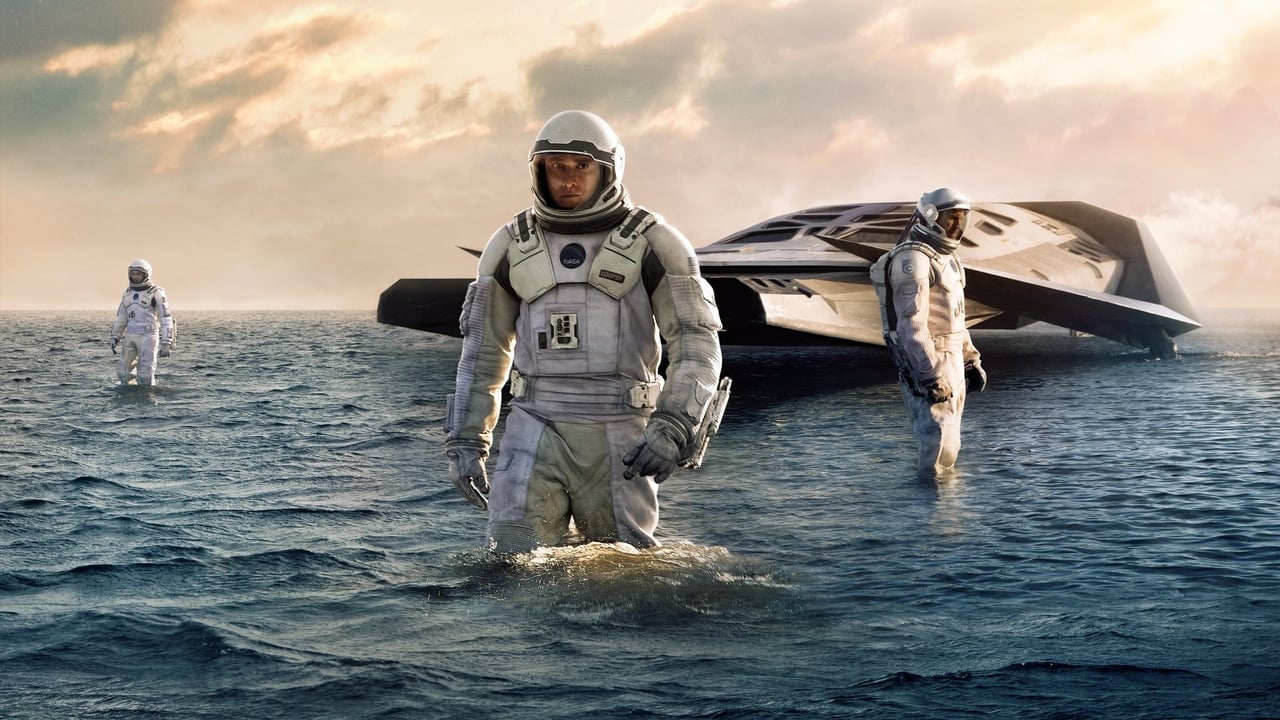
The intense time dilation observed on that water-covered world is theoretically possible under specific, extreme relativistic conditions. To achieve the ratio where a single hour on the surface equals seven years in unwarped space, Miller’s planet must orbit a rapidly spinning Kerr black hole.
Gargantua must spin at approximately 99.99999998% of its theoretical maximum, dragging the fabric of spacetime along with it through frame-dragging. Furthermore, the planet must occupy an orbit right at the innermost stable circular orbit, sitting near the event horizon without plunging inward.
That mathematical framework drives the film's tragic narrative core. Because time slows the deeper an observer sits within a gravitational well, Cooper and Brand experience only hours on the surface, while observers outside the well age decades.
When the crew is delayed by towering tidal waves, pulled upward by Gargantua's immense gravitational forces, that delay costs them 23 years. Romilly, waiting aboard the Endurance outside the severe gravitational well, experiences that full duration. Seeing an older Romilly greet an unchanged Cooper demonstrates the stark reality of relativistic time dilation.
That relentless ticking in the background during the sequence underscores how Interstellar's score makes time feel irretrievable. A common viewer theory suggests that the musical ticks occur every 1.25 seconds to indicate an Earth day passing. While an intriguing observation, the precise math differs slightly.
Calculating the film's one-hour-to-seven-years ratio reveals that one Earth day corresponds to roughly 1.41 seconds on Miller's planet. The 1.25-second tempo is an artistic choice designed to create acute rhythmic anxiety rather than an exact astronomical clock.
Why Gargantua Looks Like That
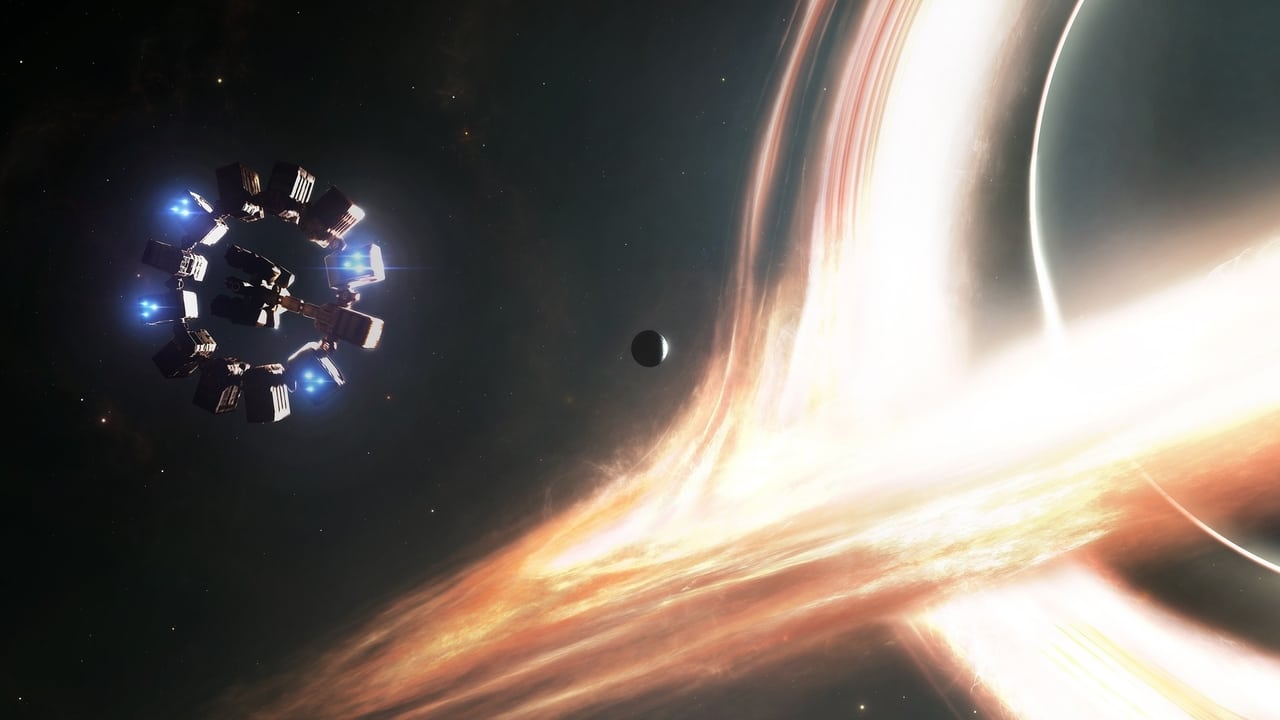
The visual depiction of Gargantua reflects general relativity equations governing how intense gravity bends light emitted by superheated plasma in an accretion disk. Because standard visual effects engines assume light travels linearly, the production team created a custom ray-tracing renderer capable of tracing curved light paths around a singularity.
Gravitational lensing causes the flat disk of gas to appear distorted, warping over the top and beneath the black hole to make the far side visible simultaneously. Analyses of how Interstellar's black hole was made demonstrate that this halo geometry accurately mirrors theoretical physics.
The film's depiction departs from observational reality in one major aspect: Doppler asymmetry. When the Event Horizon Telescope captured the first direct image of a black hole in 2019, one side of the ring appeared substantially brighter than the other. Material rotating toward the observer undergoes relativistic beaming and appears brighter and blue-shifted, whereas receding material appears dimmer and red-shifted.
Both Kip Thorne and director Christopher Nolan understood this mechanism, but Nolan omitted Doppler beaming to preserve visual comprehension. Gargantua’s clean, glowing symmetry was not an accidental omission; it was a deliberate artistic decision to ensure visual clarity for the audience.
Wormholes and the Limits of Tested Physics
While black holes are established celestial bodies, traversable wormholes and nitrogen-consuming blights remain in speculative territory. The film visualizes the wormhole accurately as a sphere, effectively a three-dimensional gateway embedded in spacetime, even though traversable wormholes remain theoretical.
Although Einstein-Rosen bridges are mathematically consistent with general relativity, maintaining an open throat would require exotic matter possessing negative mass, which has never been observed. The narrative circumvents this hurdle by attributing the wormhole's stabilization to higher-dimensional beings.
Similarly, the agricultural blight threatening Earth's food supply is portrayed as a biological pathogen that consumes nitrogen, steadily depleting atmospheric oxygen. To evacuate Earth, Professor Brand attempts to solve a gravitational equation for Plan A, requiring a theoretical reconciliation between general relativity and quantum mechanics.
Because the interior of a singularity remains unobservable, the missing quantum data serves as the central plot catalyst. That theoretical impasse clarifies why Dr. Mann lies in Interstellar, as he concludes that Plan A is physically impossible and prioritizes personal survival over scientific duty.

The Tesseract and the Quantum Message
Once Cooper crosses the event horizon, the narrative transitions from observational relativity into speculative higher-dimensional theory.
In theoretical physics, an object falling past the event horizon of a supermassive black hole might survive initial entry, though tidal gravitational forces would eventually cause spaghettification. Cooper instead enters a tesseract, a five-dimensional construct allowing a three-dimensional observer to navigate time as spatial coordinates. The Interstellar ending employs this framework to close Cooper's causal loop, utilizing gravity as the only force capable of crossing dimensions to manipulate Murphy’s watch.
The proposition that love acts as a quantifiable physical force represents a poetic theme rather than a verifiable scientific principle. It provides emotional resonance for audiences drawn to space stories about time and family, grounding relativistic physics in human relationships.
Upon his recovery near Saturn, Cooper is recorded as 124 Earth years old. His biological youth remains preserved through the intense time dilation experienced on Miller's planet and during the gravitational slingshot around Gargantua.
Interstellar endures because it respects mathematical physics sufficiently to make temporal separation devastating, introducing speculative mechanics only when necessary to reunite its characters.

