
How Interstellar's Black Hole Was Made: Physics and VFX Choices
Discover how Kip Thorne's physics, a custom renderer, and practical on-set techniques combined to create Gargantua.
KinoShelf Journal · · 4 min read
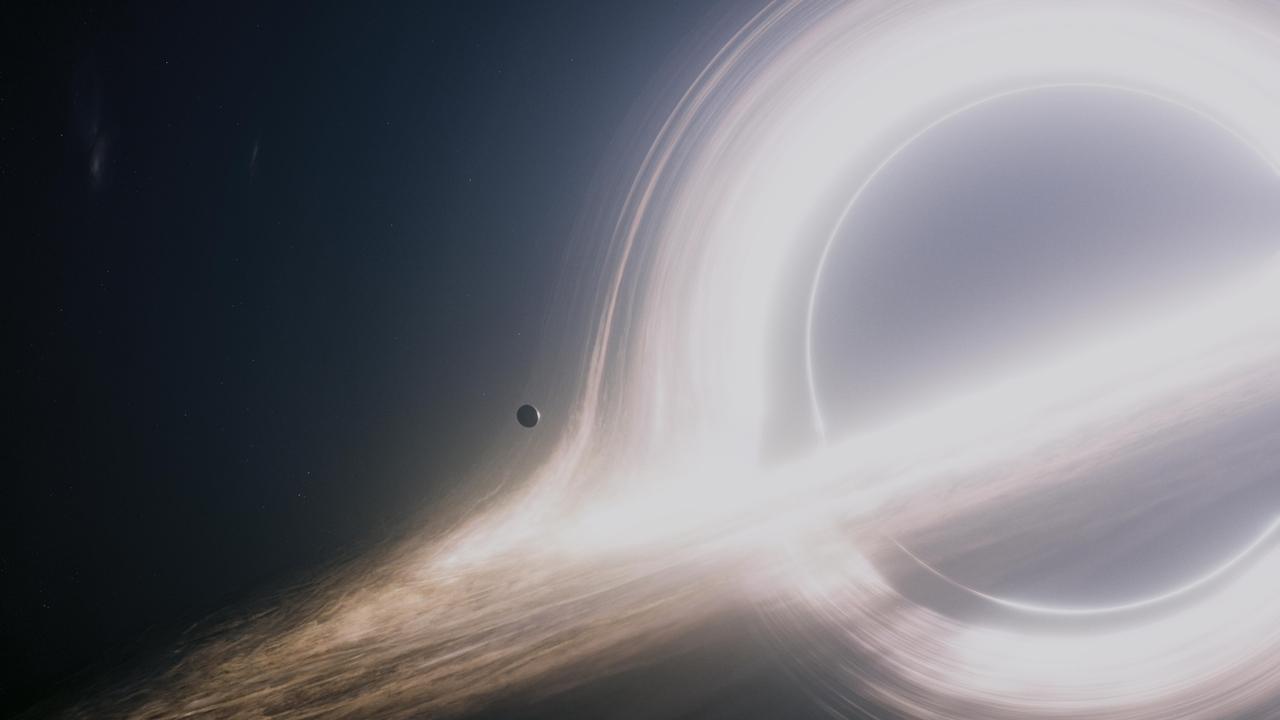
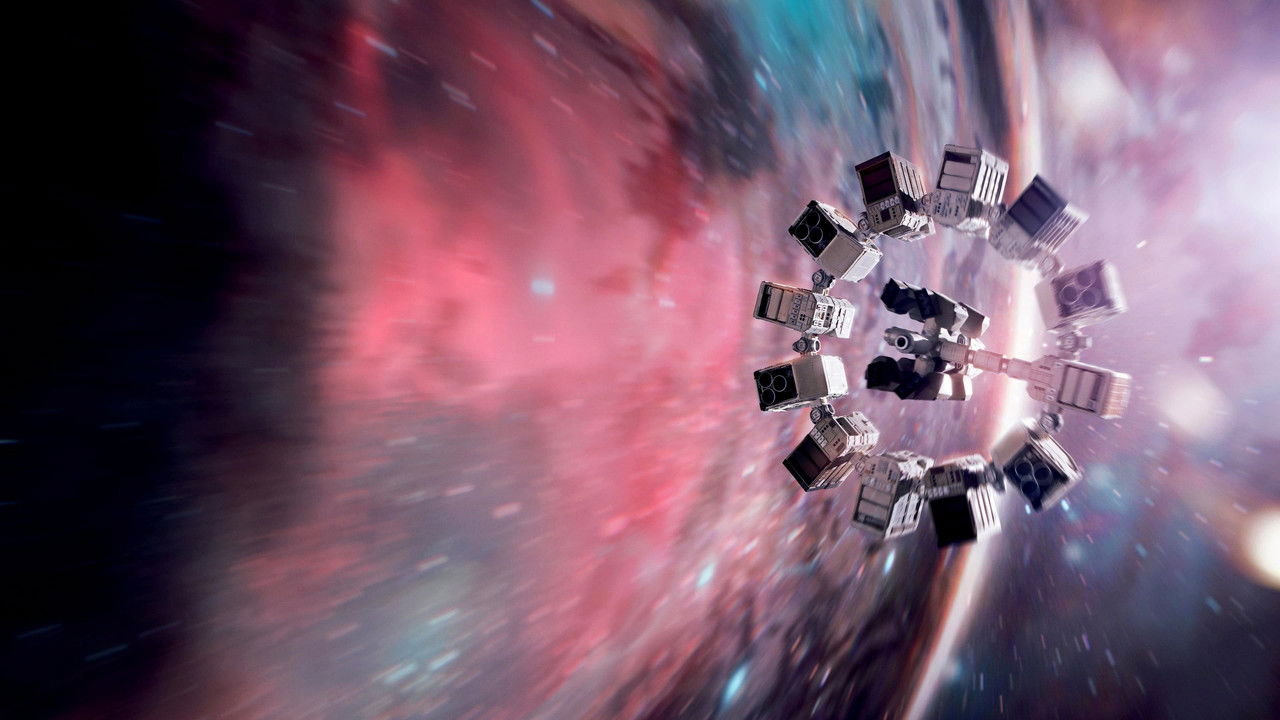
Gargantua in Interstellar (2014) achieves exceptional visual authority because theoretical astrophysics were paired directly with tactile, on-set filmmaking techniques. The black hole is an entirely digital construct, yet the surrounding production relies on physical sets, miniatures, and front-projected lighting to anchor Kip Thorne's mathematical modeling.
Kip Thorne’s Equations and the DNGR Renderer
When the production required a supermassive black hole, the team avoided speculative concept art and conventional animation shortcuts. Theoretical physicist Kip Thorne collaborated directly with visual effects studio Double Negative (DNEG), providing detailed mathematical formulations describing how light emitted from background celestial bodies curves around a gravitational singularity before reaching a virtual lens.
Standard animation suites could not compute the extreme gravitational lensing dictated by Einstein’s field equations, prompting DNEG to engineer an entirely new rendering architecture: the Double Negative Gravitational Renderer (DNGR). By integrating Thorne’s equations directly into ray-tracing calculations, the software simulated millions of light beams traversing warped spacetime. This computational approach generated the distinctive halo geometry, where the luminous accretion disk appears folded above and beneath the black hole simultaneously.
Producing these sequences at IMAX resolution required immense computing power; individual frames required up to 100 hours of calculation, ensuring the simulated distortion matched authentic lens characteristics. The computational techniques proved sufficiently rigorous that Thorne and the DNEG visual effects team published their findings in a peer-reviewed scientific journal.
Artistic Choices: Why Gargantua Isn’t 100% Accurate
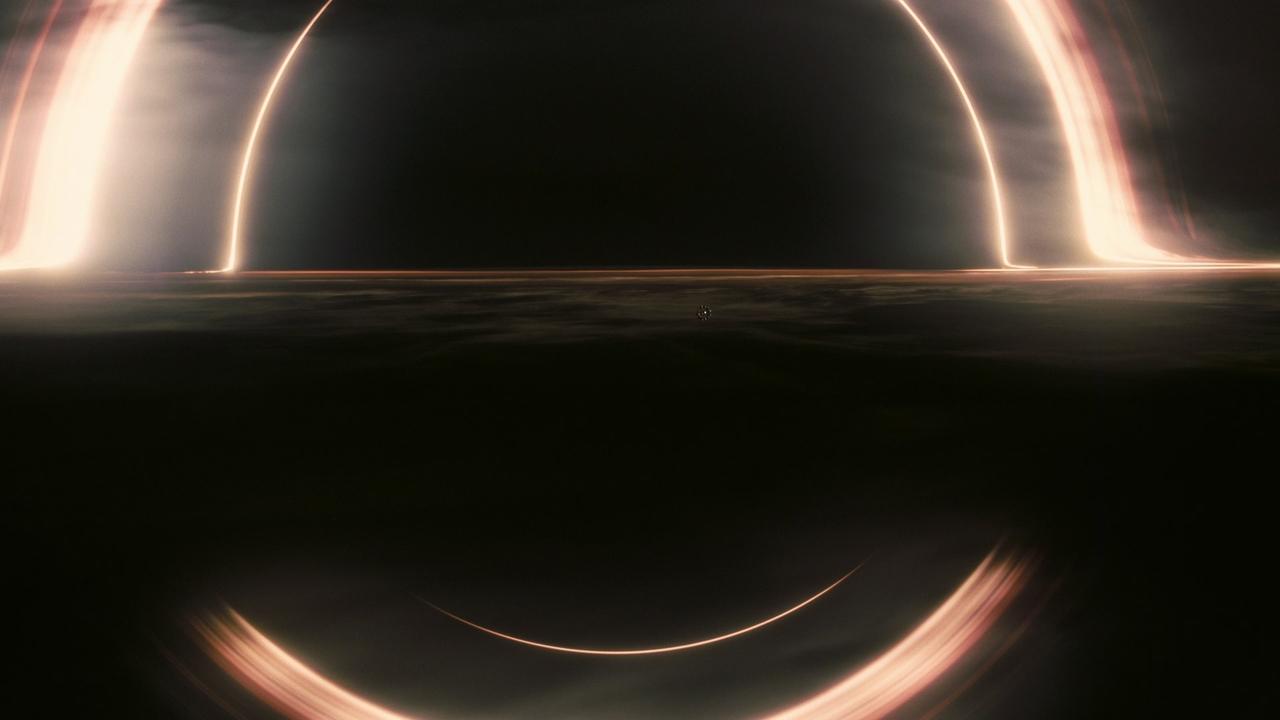
Despite its mathematical foundation, Gargantua is not a literal facsimile of an astrophysical black hole. A fully accurate simulation of a rapidly rotating Kerr black hole would feature pronounced Doppler beaming. The portion of the accretion disk rotating toward the camera would appear intensely luminous and blue-shifted, whereas the receding side would appear faint and red-shifted.
Visual effects supervisor Paul Franklin and director Christopher Nolan deliberately omitted this asymmetrical luminance. They determined that an unbalanced, heavily distorted ring would confuse viewers who were unfamiliar with relativistic optics. The priority was communicating the scale and structure of the singularity clearly on screen, rather than producing an image that might be misinterpreted as a rendering flaw.
This deliberate simplification explains why real black hole imagery, including data collected by the Event Horizon Telescope, displays prominent Doppler asymmetry compared to Gargantua’s symmetrical halo. The filmmakers calibrated physical precision to preserve dramatic clarity.

Projected Screens and Miniature Spacecraft
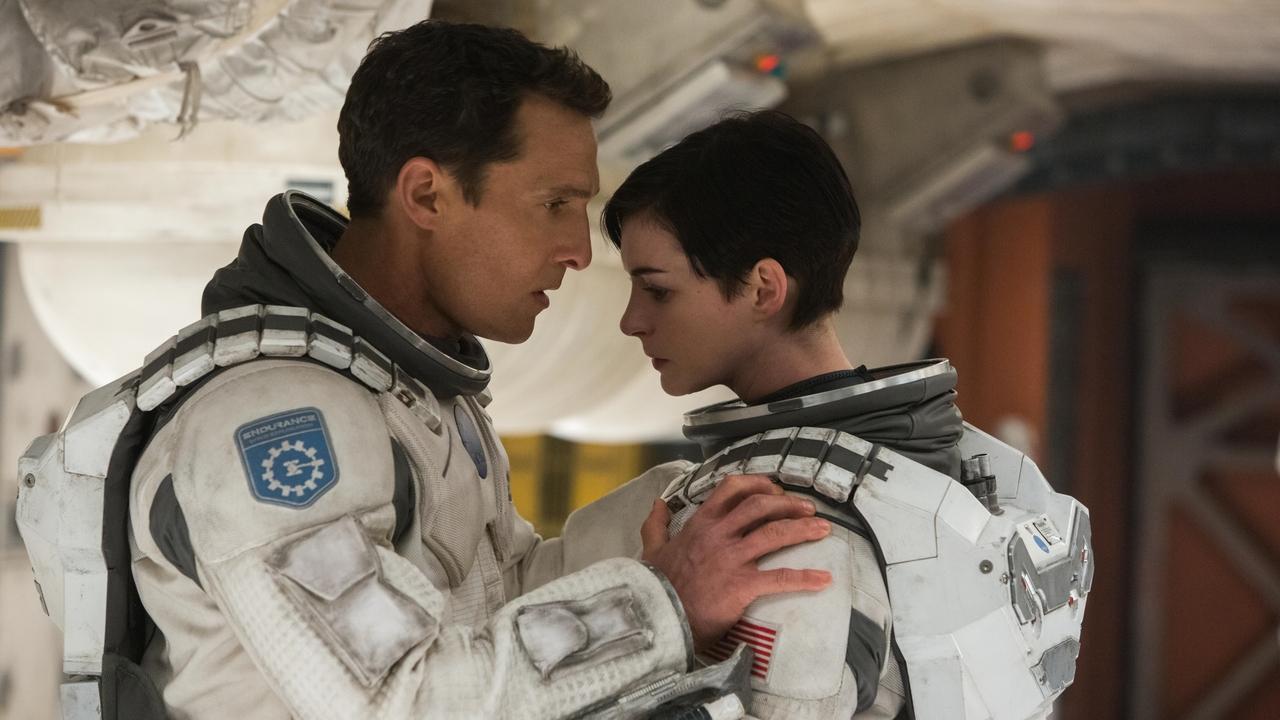
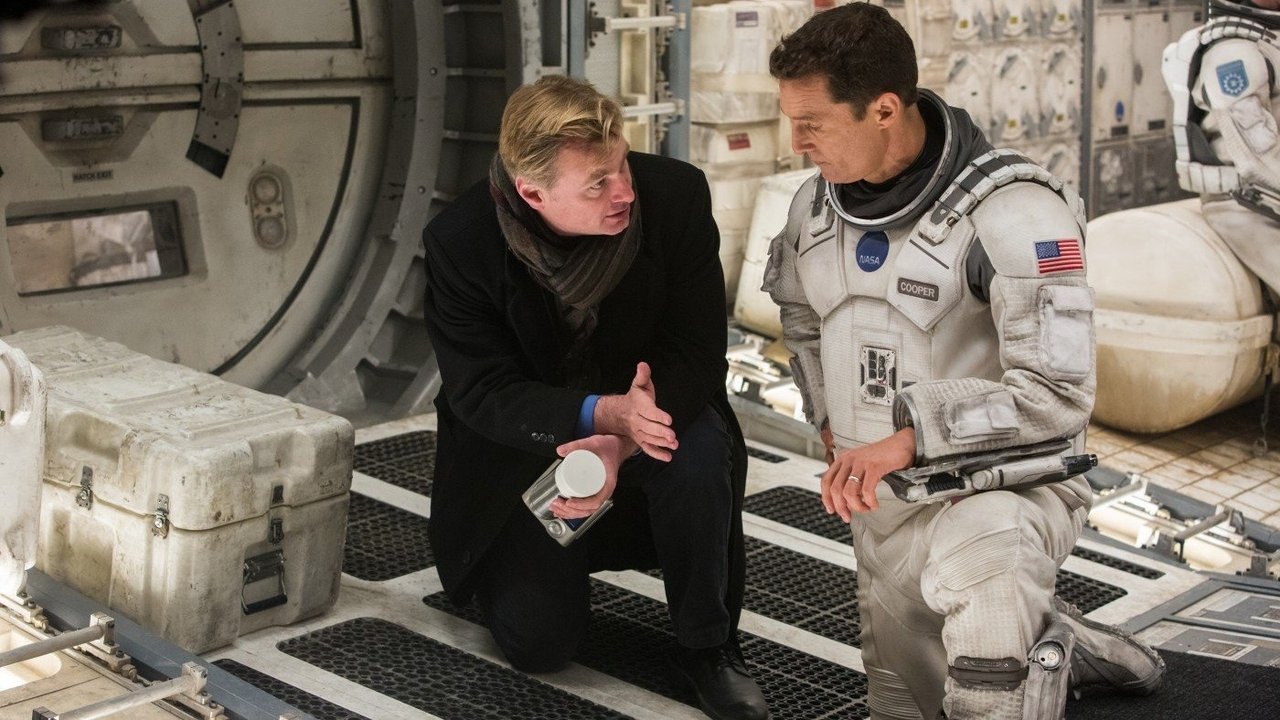
To convey the extreme relativistic scale of the physics, the production ensured that performers interacted with their visual environment organically. Rather than relying on green screens, the visual effects team pre-rendered background space vistas and accretion disk environments prior to principal photography.
During shooting, these high-resolution sequences were front-projected onto extensive projection arrays surrounding the spacecraft sets. When actors looked through cockpit viewports, they observed the rendered environment directly in real time.
This technique provided realistic interactive illumination across the actors and practical cockpit consoles. The warm glow from the accretion disk bounced off instruments and faces naturally, eliminating the sterile, detached quality common in post-production digital compositing.
Furthermore, exterior depictions of the Ranger and the Endurance utilized physical scale miniatures alongside CGI. Filming detailed models with motion-control cameras captured authentic surface scratches, dust, and metallic specular highlights, conveying a fragile, functional industrial aesthetic against the vastness of Gargantua.
TARS, CASE, and the Tesseract
The commitment to physical realism extended directly to the crew's robotic counterparts. TARS and CASE were not digital creations inserted during post-production.
They were functional articulated puppets fabricated from metal and manipulated on set by performer Bill Irwin, who moved the rigs while speaking his dialogue. Having mechanical props moving within the set gave the cast tangible elements to interact with, reinforcing the physical authenticity of the mission.
The most elaborate fusion of practical construction and spatial design occurred during the depiction of the higher-dimensional singularity.
The Gravity of Practical Filmmaking
Gargantua functions effectively because computational physics were balanced by tactile cinematography. The relativistic math delivered scale, while practical set construction provided weight.
Examining how accurate Interstellar's science actually is highlights where Kip Thorne’s theoretical models intersect with cinematic storytelling. Miniature spacecraft, practical lighting reflections, and mechanical robotics collectively ground the grand narrative in tangible reality.
This disciplined approach reinforces Dr. Mann’s isolation, Cooper’s journey through higher dimensions, and the central family relationship anchoring the narrative. Similarly, Interstellar's score makes time feel irretrievable because Hans Zimmer’s instrumentation accompanies an environment that feels physically convincing.