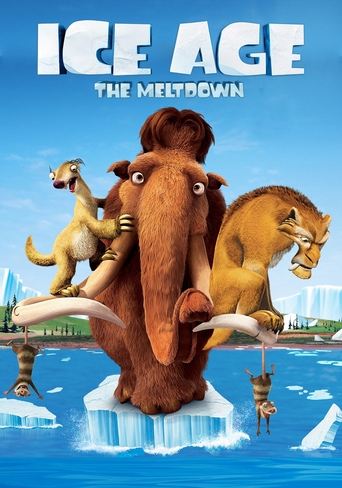


Ice Age: The Meltdown's Last Mammoth Plot vs. Real Mammoth Science
Manny's fear of being the last mammoth looks clumsy on rewatch, until you set his grief beside what real Wrangel Island mammoths reveal about survival.
KinoShelf Journal · · 6 min read
Manny’s fear of being the last mammoth in Ice Age: The Meltdown (2006) makes almost zero sense as literal biology, yet it works remarkably well as a mask for unresolved grief. Measured against real woolly mammoth genetics, the sequel’s extinction premise bends the science while landing a sharp emotional point about isolation. Full ending spoilers are discussed below.
Why Manny's Last-Mammoth Fear Starts as Grief
The first act frames Manny’s anxiety around species survival, though the script roots that dread in personal loss rather than an actual census of the valley. Across 91 minutes of melting ice and rising floodwaters, Manny keeps circling back to the idea that he is the last mammoth left alive. Anyone who rewatches the sequel usually bumps into this setup pretty quickly, and online fan debates routinely call the storyline ridiculous because Manny has no way of knowing what lives beyond his own valley.
That objection holds up if you treat Manny’s fear as a logical argument. It clicks a lot better once you read it as a continuation of the darker grief carried over from the first film. Manny has already lost his wife and child, and convincing himself that he is the end of the line gives him a convenient excuse to never build another family. When he finally meets another mammoth, he pushes his feelings down at first because opening up feels too much like replacing the family he lost.
Extinction anxiety ends up pulling Manny in two opposite directions at the same time. On the surface, the fear of being alone pushes him to look for proof that other mammoths are still out there. Underneath, the weight of his past makes him freeze the moment that proof turns into a real relationship.

Why Ellie's Possum Identity Tests That Premise
Ellie’s insistence that she is a possum exists to strip away Manny’s biology-first excuse and force him to see her as a person rather than a solution. Raised by opossums, she has a grounded backstory revealed in a snowstorm flashback showing her as an orphaned calf adopted by Crash and Eddie’s mother. She doesn’t cling to the possum identity just for a quick gag; it’s the only family structure that kept her alive when she was completely on her own.
That history explains why Manny’s biggest misstep backfires so badly. When he tries to win her over by suggesting they have a duty to save their species, Ellie takes the pitch as an insult and pulls away. Her reaction cuts straight through the flaw in the last-mammoth premise: nobody wants to be courted like a biological obligation, especially someone who has already built a fiercely loyal family across species lines.
Because Ellie refuses to buy into "you’re a mammoth, so you belong with me," Manny loses his favorite hiding spot. Before they can patch things up, he has to stop treating her like a walking cure for his loneliness and start respecting the life she already chose with her brothers.

How the Ending Answers Manny's Fear
The final act dismantles Manny’s extinction fear in a matter of minutes so the story can focus on who he actually wants beside him. Once the valley’s ice dam fails and floodwaters surge, the movie stops debating the future of mammoths and tests what Manny is willing to risk right now. The flood resolution and the sudden arrival of other mammoths directly answer the premise that haunted him from the opening scenes.
This story has 2 spoiler sections.
Holding back the herd until after the flood is what makes the timing work. Had Manny stumbled onto a herd in the first act, his arc would have wrapped up before he ever learned to let go of his past or accept Ellie on her own terms. Once the herd finally shows up, the biological pressure evaporates overnight, leaving Manny with a clean emotional choice.
Sid and Diego carry that final beat across the finish line, with Diego's growth from guarded loner to loyal friend coming through clearly as he and Sid nudge Manny to move on and go after Ellie. What happens next settles both the romance and the bigger question of whether bloodline outranks chosen family.
What Real Wrangel Island Mammoths Actually Show
Real paleogenetics complicates the neat assumption that a tiny, isolated mammoth group is automatically doomed to vanish overnight. Small, cut-off mammoth populations did exist in the real world, and the clearest example comes from Wrangel Island. A June 27, 2024 study in Cell by Dehasque, Dalen, and colleagues ("Temporal dynamics of woolly mammoth genome erosion prior to extinction") analyzed 21 woolly mammoth genomes: 14 from Wrangel Island and 7 from the mainland.
Their findings push back against the older assumption that a severe bottleneck guarantees an immediate "genomic meltdown." The Wrangel Island herd started from at most 8 animals, yet it stabilized at roughly 200 to 300 mammoths and hung on for millennia. The population was inbred, just as you’d expect from such a tiny founding group, but it actively purged harmful mutations over time rather than simply collapsing under genetic decay.
The study is careful about where the evidence stops. While it makes a strong case against the classic genomic meltdown model, it doesn’t completely rule out genetic factors playing a part in the end. High-quality DNA is still missing from the final roughly 300 years before the island mammoths disappeared, leaving the closing chapter of their survival open.

What the Film Gets Wrong About Extinction, and Why It Works Anyway
Ice Age: The Meltdown never sets out to make a scientific case about population genetics, and judging it like a nature documentary misses how animated shorthand works. On a strict biological level, two mammoths running into each other in a flooding valley couldn’t rescue a species from extinction, and a hidden herd strolling out of a cracked glacier is pure screenwriting convenience. Real isolated herds like the one on Wrangel Island endured for generations through hundreds of animals adapting over time, not through a single romantic pairing.
Even so, the real science and the movie land on a surprisingly compatible takeaway about isolation. Wrangel Island shows that being cut off in a small group doesn’t automatically strip away the capacity to endure. The film arrives at that same emotional truth from the opposite direction: Manny convinces himself his life only counts if he saves his species, then realizes the herd was never the point. Staying with Ellie, Crash, Eddie, Sid, and Diego proves that his fear of being the last mammoth was only ever a louder way of admitting he was terrified of being alone again.