
Frankie Heck Isn't a Bad Mom. She's a Mom With No Time Left
Frankie's mistakes matter, but The Middle ties them to job pressure, scarce time, and the guilt of raising three children without any margin.
KinoShelf Journal · · 3 min read
The Middle never asks viewers to pretend Frankie Heck gets motherhood right. It asks a harder question: how much of her failure belongs to her, and how much comes from raising three children while paid work keeps taking the time she meant to give them? Her mistakes matter, but the series treats them as choices made with too little time and energy.
The Case Against Frankie Heck
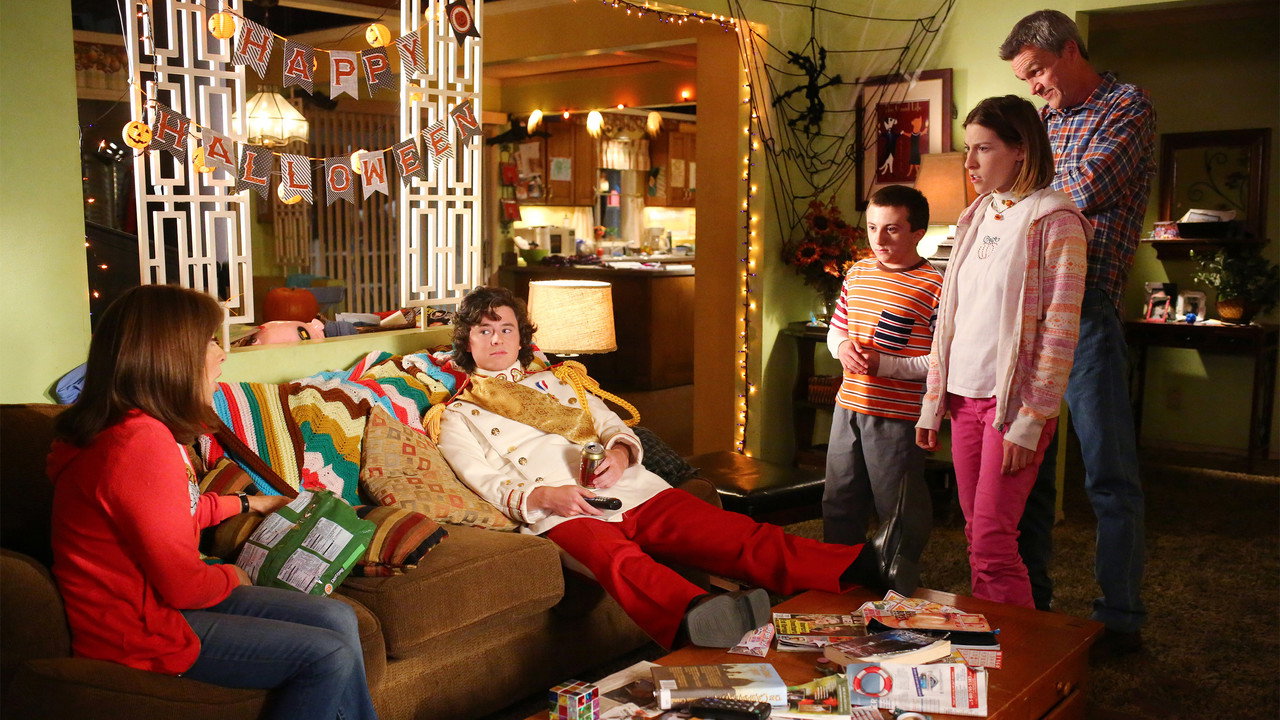
The strongest case against Frankie comes from the children themselves. In S8E3, "Halloween VII: The Heckoning", she learns that all three would choose to live with Mike if their parents divorced. That answer cannot be dismissed as an outsider holding her to an impossible standard. Her own children experience Mike as the steadier parent.
Frankie's hurt does not make the verdict unfair, and loving her children does not erase its effect on them. This is where the bad-mom argument has weight: pressure explains an uneven parent, but it does not turn every missed need into someone else's fault. The episode lets the criticism land before asking what produced the imbalance.
Work Keeps Taking the Time She Promised Her Family
Frankie starts the series as an under-performing car salesperson at Ehlert Motors. In S1E8, "Thanksgiving," Mr. Ehlert makes the staff work on the holiday, wrecking her plan for a perfect Thanksgiving. The shift takes away the time she had set aside for her family.
She loses the dealership job in season four, completes dental assisting school, and finds work at a dentist's office. The change does not grant her unlimited family time. S7E8, "Thanksgiving VII," puts her back at work on the holiday and in conflict with a coworker. In both episodes, work takes the hours she needs to deal with family problems.
That pattern also explains why Frankie belongs at the center of a family that never quite gets the win. The series does not clear her of responsibility. It shows how often responsibility arrives after work has already claimed her attention.
Her Narration Turns Judgment Into Guilt
Frankie narrates the series, so the mother being judged is also the person who frames the family's story. That choice does not prove she is right, but it prevents her mistakes from reading as simple indifference. She sees the gap between the parent she planned to be and the parent her available time permits.
The Halloween vote hurts because it confirms that the gap is visible to her children. Yet the series never converts guilt into automatic forgiveness. Frankie's self-awareness matters only because the show also lets consequences remain. Sue's repeated losses make the same distinction: recognizing pain is not the same as making it disappear.
Caregivers Without a Halo
Frankie's appeal comes from watching a parent remain responsible without becoming idealized. These four series change the family structure, tone, and source of pressure while keeping that tension intact.
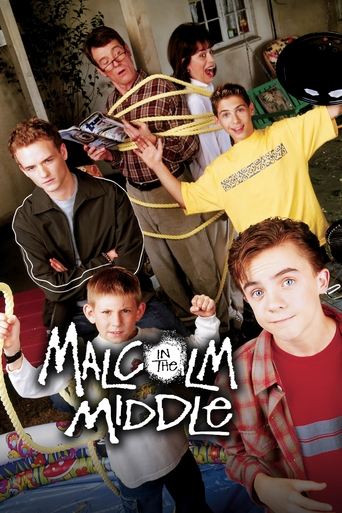
Malcolm in the Middle follows a gifted teenager inside a dysfunctional family, with Lois supplying a louder and more authoritarian kind of maternal pressure. Its seven seasons give family conflict a sharper edge, though viewers attached to Frankie's apologetic narration may find Lois too forceful.


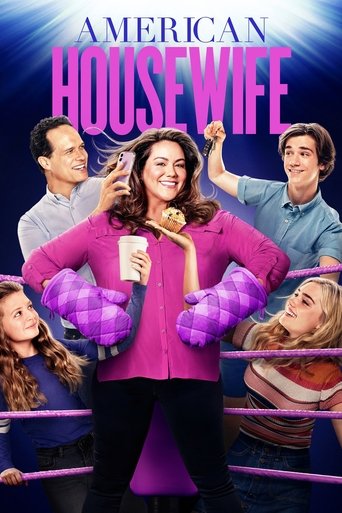
American Housewife gives Katie five seasons of raising a flawed family in a wealthy town built around polished wives and overachieving children. Her narration pushes against an impossible local standard, replacing the Hecks' middle-class pressure with suburban status conflict.

Gilmore Girls centers a seven-season mother-daughter bond shaped by ambition and grandparent pressure. Its focus on Lorelai and Rory leaves behind the daily collisions of three siblings competing for attention.

Everything's Gonna Be Okay shifts from motherhood to a 25-year-old becoming caregiver to his two teenage half-sisters after their father reveals he is terminally ill. Its two seasons show responsibility learned in real time through a household that abandons the traditional parents-and-children sitcom structure.