


I Will Find You Plot Holes: Which Ones Actually Matter
Sorting the five biggest plot holes in Netflix's I Will Find You into fixable, forgivable, and genuinely broken flaws across character motive and logistics.
KinoShelf Journal · · 7 min read
Most post-finale frustration with I Will Find You points at the wrong target. The eight-episode adaptation of Harlan Coben's 2023 novel, developed by Coben and showrunner Robert Hull, actually builds a serviceable framework for how a staged death and five-year disappearance could happen; where the logic cracks is in why the people inside that conspiracy behave the way they do. Sorting the five biggest viewer complaints against what the series actually puts on screen separates the flaws into three clear buckets: fixable, forgivable, and genuinely broken.
- Cheryl's role and the fake bus crash: Genuinely broken on character, fixable on the alibi, because the hospital diversion works as a one-night distraction while Cheryl's broader arc exists mainly for plot convenience.
- Hayden's behaviour toward Rachel and the search: Genuinely broken on motive, forgivable on surveillance, because breaking up with Rachel yet staging a kidnapping for her fails basic motive logic even if staying close to the search makes tactical sense.
- Nighttime toddler abduction and five-year cover: Forgivable, because billionaire insulation and a three-year-old's fragile memory keep the logistics within standard thriller rules.
- The body swap and DNA match: Fixable, because the script relies on faked DNA rather than no DNA test at all, though chain-of-custody gaps stay hand-waved.
- The bought-witness chain (Hilde Winslow and Nicky Fisher): Forgivable, because coerced testimony backed by mob leverage is convoluted yet functions as a realistic firewall.
The Cheryl problem
Cheryl absorbs two separate frustrations: her rapid emotional exit from David Burroughs's life and the mechanics of the night Matthew vanished. On the night of the kidnapping, Cheryl's future husband Ronald Dreasen called her into the hospital over an invented mass-casualty bus crash, and she remained at the hospital for the rest of the night after the bus had supposedly been diverted.
There is a fair counter-reading for the hospital night itself. Emergency physicians routinely stay through a shift once they have already scrubbed in and disrupted their evening, especially when a colleague they trust is on duty. Grief also fractures marriages fast; when forensic evidence and a neighbor's sworn testimony point directly at a spouse, stepping away to survive is not unheard of.
This story has 5 spoiler sections.
Hayden's behaviour toward Rachel and the search
The single most damaging logic gap belongs to Hayden Payne, whose motives clash with his own choices before and after the kidnapping.
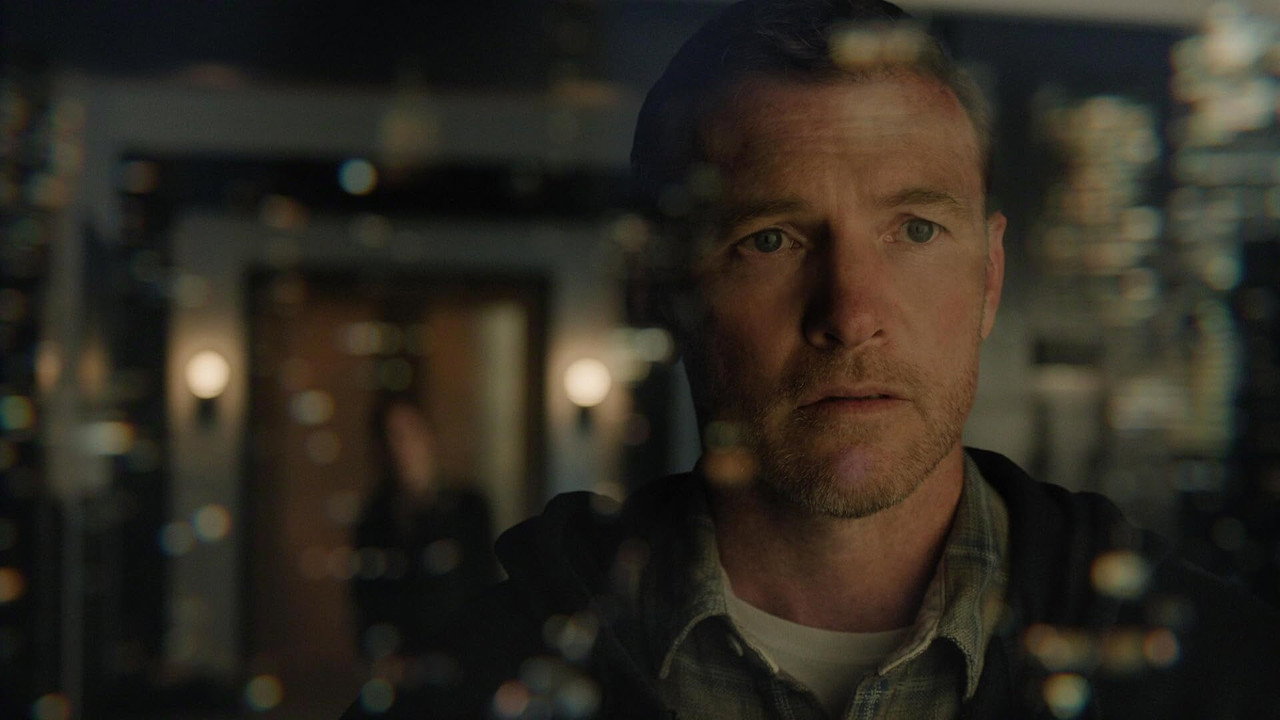
The strongest defense of Hayden rests on psychology rather than strategy. An obsessive, entitled heir does not run a rational cost-benefit analysis before crossing a moral line; tunnel vision explains why he acted on certainty rather than verification. Once Rachel showed David the background photograph of Matthew and triggered the breakout, staying close to Rachel also served a practical purpose, letting him track how close David and Rachel were getting and delay the moment in Episode 7 when Rachel sees the missing photographs.
That split is why the complaint breaks into two verdicts. Hayden's surveillance-by-proximity during the manhunt is forgivable: villains hiding inside the search party is a classic thriller move that pays off when his cover collapses at the Payne estate. His foundational motive, however, is genuinely broken. Asking viewers to accept that a wealthy, obsessive man willingly broke up with Rachel, never verified paternity, and committed a multi-year framing conspiracy to raise a child he never confirmed was his stretches character logic past the snapping point.
A toddler taken at night and the kidnapping logistics
Pulling a three-year-old out of his home at night and raising him under a new name for five years strikes many viewers as logistically impossible.

Measured against how real memory and private wealth work, this is actually one of the more defensible stretches in I Will Find You. Children aged three rarely retain stable, retrievable episodic memories after a complete environmental shift, especially when coached into a new name and routine. Ronald's fabricated hospital emergency cleared Cheryl from the house, leaving only David to account for, while Gertrude Payne's philanthropic footprint and private resources explain how a child could be moved and housed in seclusion without triggering standard border or social-services alerts.
This complaint sits firmly in the forgivable column. The logistics are high-wire and heavily stylized, but the series puts the necessary scaffolding, wealth, institutional access, and Matthew's young age, on screen before asking you to buy the five-year disappearance.
The body swap and DNA
Forensic skepticism around Matthew's supposed death is widespread, partly because several post-finale discussions misstate what happened. Some critiques argue that investigators never ran a DNA test on the body at all, which would be an obvious policing failure for an unrecognizable child found dead at home.
The counterpoint cuts both ways. By establishing tampered DNA rather than a missing test, the script closes the most blatant procedural hole: investigators had a forensic match on paper, which is why David's conviction held for five years until Rachel's photograph forced a second look. What the series glosses over is the institutional friction required to plant and maintain a forged DNA result across a high-profile child-murder prosecution without a defense retest exposing the swap.
That makes the body swap fixable rather than broken. A tighter scene detailing how Payne money compromised the lab or blocked an independent defense test would have sealed the seam completely. As written, it is a rushed shortcut, not a flat contradiction.
The bought-witness chain
To lock in David's conviction, the conspiracy leans on neighbor Hilde Winslow delivering false testimony under pressure from Boston mob boss Nicky Fisher. On the surface, bringing organized crime into a billionaire family's personal obsession looks like an unnecessary Rube Goldberg machine: more moving parts, more witnesses, and more ways for the cover-up to leak.
Look closer at how criminal insulation works, and the chain holds together better than expected. Hayden and Gertrude Payne could not personally threaten a neighbor without tying the framing directly back to their own names. Outsourcing coercion to Nicky Fisher created a firewall: if Hilde broke, the trail pointed toward local mob intimidation rather than a philanthropic dynasty. Coerced testimony under debt or family pressure is also far more grounded than most thriller twists.
The witness chain earns a forgivable rating. It makes the middle episodes crowded, and it forces David and FBI agent Sarah Greer to peel back multiple layers before reaching the Payne estate, but the underlying logic of using a criminal cutout is sound.
Verdict: which holes matter
Strip away the noise, and I Will Find You suffers from an inverted problem. The mechanical twists that sound wildest on paper, including the Swiss orphanage swap, the faked DNA, the mob-pressured witness, and the five-year reinvention of Matthew as Theo, are either fixable with a couple of extra procedural lines or forgivable within the rules of a high-stakes crime thriller. Robert Hull deliberately diverged from Coben's 2023 novel for the television ending, and the Episode 8 payoff delivers a clean physical resolution.
What genuinely hurts the finale is character motive. You can forgive a billionaire buying a forged lab report faster than you can forgive Hayden's contradictory obsession with Rachel or Cheryl's thin, plot-serving presence. If you want to trace how those Episode 7 and Episode 8 reveals fit together beat by beat, the full ending breakdown maps out every piece of the closing sequence.